
Muhammad Usman Aleem
Table of Contents
Almost all healthcare organizations suffer from the same issue:, which is slow workflows that delay imaging reports and systems that don’t sync well together. Without a proper RIS-PACS setup, scheduling delays escalate into missed appointments, radiologists waste time hunting for images across fragmented systems, and reports pile up. These problems often boil down to a lack of clarity between two tools: PACS and RIS. They are often mentioned together, but serve very different purposes. In fact, studies have shown that up to 20% of data entries in electronic health systems contain errors or are incomplete, directly impacting radiology workflows. This blog explains the real differences between RIS vs PACS, and which one is better for a radiology or imaging department.
What is RIS?
RIS stands for Radiology Information System. It’s a software used by radiologists to manage their day-to-day operations. It serves as an administrative system that performs tasks such as patient registration, appointment scheduling, tracking scans, managing reports, etc.
Just like labs use LIS, which is the Laboratory Information System, radiology departments use RIS to keep everything organized. It helps streamline the workflow, patients can be scheduled efficiently, technologists can track exams, and reports can be delivered faster.
What is PACS?
PACS stands for Picture Archiving and Communication System and focuses on handling medical images. It stores, retrieves, and shares digital images from scans like X-rays, MRIs, and CTs.
While RIS manages the admin side of things, PACS handles the images themselves. It’s a powerful system that deals with large and complex imaging data and makes those images available to radiologists and other clinicians when they need them.
In many hospitals and imaging centers, PACS and RIS are used together. They each have different jobs, but when connected, they make the entire radiology workflow much more efficient, from scheduling to diagnosis to reporting.

RIS Vs PACS: Difference at a Glance
Aspect |
RIS (Radiology Information System) |
PACS (Picture Archiving and Communication System) |
Main Purpose |
Handles admin tasks like patient scheduling, registration, and reporting. | Manages and stores digital medical images like X-rays, MRIs, and CTs. |
Primary Users |
Admin staff, technologists, and referring physicians. |
Radiologists and clinicians who interpret images. |
Type of Data |
Text-based data: patient info, appointment records, billing, and reports. | Visual data: high-resolution medical images (usually in DICOM format). |
System Integration |
Connects with hospital systems (like HIS and billing software). |
Connects with RIS, EHRs, and dictation tools for a smooth imaging workflow. |
Data Security |
Protects patient details and complies with data privacy laws. | Secures image files with encryption and controlled access. |
Workflow Benefits |
Improves scheduling, reporting, and tracking of patient records. |
Speeds up image access, sharing, and diagnostic processes. |
Quality Control |
Helps maintain consistency and accuracy in reports and records. | Supports tools to ensure image quality and consistency. |
Scalability |
Can scale with growing patient volume and admin needs. |
Handles large volumes of images and supports multi-location use. |
Accessibility |
Staff can access records based on roles and permissions. | Radiologists can view and interpret images remotely. |
Interoperability |
Shares data with other systems for smooth coordination. |
Works with imaging devices and clinical systems for end-to-end care. |
Reporting Tools |
Generates reports for scheduling, billing, and patient history. | Allows radiologists to create diagnostic reports with images and notes. |
Maintenance |
Needs regular updates to stay secure and efficient. |
Requires monitoring to ensure performance and data reliability. |
RIS Vs PACS: Which One to Choose?
If you think that you need to have just one, RIS or PACS, re-evaluate. It’s not really about choosing one over the other. For most healthcare organizations, a fully integrated RIS + PACS setup offers the best results.
- If the aim is to improve scheduling, patient tracking, and reporting, start with a strong RIS. It will help you streamline administrative tasks and reduce manual work across your team.
- If the main challenge is managing and accessing medical images efficiently, then PACS is essential. It allows radiologists and clinicians to quickly retrieve, view, and share imaging studies from anywhere.
For most healthcare organizations, a fully integrated RIS + PACS setup offers the best results. Together, they create a connected workflow that improves speed, accuracy, and patient care.
Real-World Workflow: RIS vs PACS in Action
Understanding the difference becomes clearer when you see how a typical radiology department handles an imaging order.
Without Integrated RIS-PACS
- Admin schedules patient CT scan in RIS (5 minutes)
- Patient arrives and completes scan
- Technician manually sends images to separate PACS (10 minutes, prone to errors)
- Radiologist logs into PACS separately to view images (5 minutes)
- Radiologist creates report manually, types it into a separate reporting system (20 minutes)
- Report is manually transferred back to RIS and patient record (5 minutes)
Total turnaround time: 45+ minutes. Multiple handoffs = higher error risk.
With Integrated RIS-PACS
- Admin schedules patient CT scan in RIS (5 minutes)
- Patient arrives and completes scan
- Images automatically appear in the radiologist’s PACS queue (automatic, no manual intervention)
- Radiologist reviews images and writes a report in the unified interface (15 minutes)
- Report automatically populates patient record and notifies referring physician (automatic)
Total turnaround time: 20 minutes. Single system = fewer errors, faster delivery.
For a 50-exam-per-day radiology department, integrated RIS-PACS saves approximately 20-25 hours per week in staff time and significantly reduces report delivery delays to referring physicians.

7 Benefits of Integrated RIS-PACS Systems
- Fluent Workflow: An integrated system connects the entire radiology process, like scheduling and order entry in the RIS to image acquisition, reporting, and archiving in the PACS. This eliminates duplicate data entry and manual reconciliation, leading to smoother and faster workflows.
- Patient care quality: Clinicians can access both diagnostic images and reports immediately within the same system, which equates to faster turnaround times. Patients receive diagnoses and treatments more quickly.
- Operational productivity: Radiologists and technologists work in a unified platform rather than switching. Administrators also benefit from streamlined scheduling, billing, and reporting processes, which reduce workload and improve departmental productivity.
- Clinical communication: Referring physicians and other care providers gain secure, real-time access to images and reports.
- Cost-effectiveness: Maintaining one integrated platform is less expensive than running separate RIS and PACS systems. Costs related to hardware, software updates, IT support, and staff training are reduced.
- Data consistency and safety: Because patient and imaging data flow through a single system, there is less risk of mismatched records or duplicate exams. This also improves patient safety by reducing unnecessary radiation exposure and ensuring compliance with standards like DICOM and HL7.
- Analytics capability: The combination of clinical and administrative data makes it easier to track performance indicators such as report turnaround times, staff workload, and equipment utilization. Hospitals can use this data to guide improvements in efficiency and resource allocation.
Deployment Timeline of RIS/PACS
- Planning & vendor selection 2-3 months: Requirements assessment, RFP process, contract negotiation
- Implementation & data migration 3-6 months: System setup, legacy data conversion, integration testing
- Staff training 1-2 months: Radiologists, technicians, admin staff, referring physicians
- Go-live & stabilization 1-3 months: Parallel run, issue resolution, full production cutover
Total: 6-14 months for most mid-size healthcare organizations (100-500 bed hospitals).
Cost of RIS/PACS Implementation
- Software licensing: $200K–$2M+ — Depends on organization size and user count
- Hardware & infrastructure: $100K–$500K — Servers, storage, network upgrades
- Implementation services: $150K–$1M — Consulting, data migration, integration
- Training & change management: $50K–$300K — Instructor-led and ongoing support
- Estimated total investment: $500K–$3.8M (with ROI typically achieved within 3-5 years through labor savings and reduced errors).
Limitations and Challenges: RIS/PACS
- Implementation Cost: Integrated systems require a high upfront investment in new software, hardware, and licensing. For many healthcare organizations, this is a major financial barrier.
- Complex deployment: Installing and configuring an integrated RIS-PACS system requires coordination across IT teams, radiology staff, and other clinical departments. Transition periods can disrupt existing workflows.
- Vendor dependency: Once a healthcare provider commits to a vendor’s RIS-PACS system, switching to another platform later can be difficult and expensive. This risk of vendor lock-in may limit flexibility in the future.
- Training needs: All staff members, be it technical or non-technical, must adapt to new workflows and interfaces. Training can be time-consuming and may temporarily reduce productivity.
- System downtime risk: Because RIS and PACS are fully integrated, a system outage can disrupt both administrative and imaging processes at the same time. Downtime can affect scheduling, reporting, and access to images, impacting patient care.
- Data migration challenges: Migrating historical data from older RIS or PACS systems into the new integrated platform can be technically complex and time-intensive. Ensuring data integrity during this process is critical but often difficult.
The Future of PACS and RIS
RIS and PACS working together is what we need in the future to meet the changing industry demands.
1. AI and Machine Learning Integration
- AI will assist radiologists in identifying patterns and abnormalities more quickly and accurately, improving diagnostic confidence.
- Routine labeling, pre-filling report templates, and routing cases based on priority will become increasingly automated.
- Predictive analytics will use historical imaging and patient data to flag high-risk cases earlier, enabling more proactive clinical decisions.
2. Shift to Cloud-Based Infrastructure
- Cloud-based RIS and PACS platforms offer on-demand scalability, allowing organizations to adjust resources as imaging volumes grow.
- Radiologists and care teams can securely access medical images and patient data from any location, supporting remote and hybrid work models.
- By reducing the need for on-premise servers and maintenance, cloud PACS systems lower IT costs and ensure continuity during outages or disruptions.
3. Enhanced Interoperability and Collaboration
- Future RIS and PACS systems will be designed for EHR integration, HIS, and third-party clinical tools for seamless data exchange.
- This enables real-time communication and information sharing between departments and specialties, from radiology to surgery to primary care.
- More connected systems support faster, more informed decision-making and a better experience for both clinicians and patients.
4. Global Data Accessibility
- Imaging data and reports will be more easily shared across geographic and institutional boundaries through secure digital platforms.
- This supports international second opinions, cross-border research collaborations, and faster responses during global health events.
- Greater accessibility helps bring advanced radiology expertise to remote and underserved areas that lack in-house specialists.
5. Focus on Sustainability
- As digital demand grows, healthcare providers are prioritizing energy-efficient data storage and environmentally conscious IT solutions.
- Migrating RIS and PACS to the cloud can significantly reduce power usage compared to traditional on-site data centers.
- Vendors are increasingly incorporating green practices and technologies into their product offerings to support long-term sustainability goals.

AI Imaging PACS Solution – PACScribe
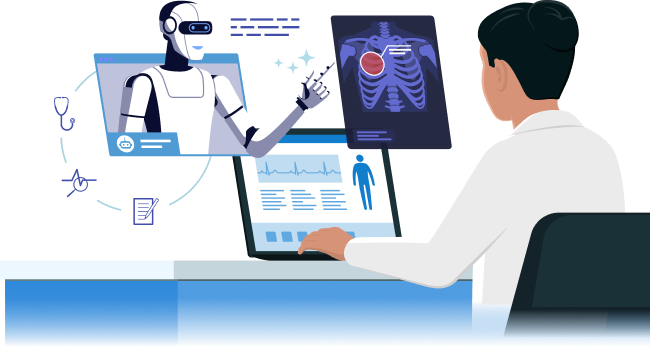
PACScribe brings imaging access and AI-assisted reporting with Epic integration, so radiology teams can review images and generate reports more efficiently within the systems they already use. Built using advanced artificial intelligence algorithms, PACScribe not only analyzes medical images with speed and precision but also generates automated reports to support clinical decision-making. The platform is fully HIPAA-compliant and integrates seamlessly with existing healthcare infrastructure through support for industry standards like DICOM and HL7. It enables secure storage, retrieval, and transmission of DICOM files, aligning naturally with the imaging workflows used by radiologists and care teams.
Conclusion
RIS vs PACS clearly defines that each serves a unique purpose, but together, they form the foundation of efficient, modern radiology. As new technologies like AI and cloud computing take hold, these systems will continue to evolve, not just to improve speed and accuracy, but to support global collaboration, better patient care, and sustainable growth.
Frequently Asked Questions
What is the role of HIS and RIS in radiology?
The Hospital Information System (HIS) manages patient records, billing, and admissions areas. On the other hand, the Radiology Information System (RIS) focuses specifically on radiology workflows:
- Scheduling
- Exam tracking
- Report management
HIS and RIS work together to ensure seamless data flow between departments. This integration helps deliver faster, more coordinated care.
What is the relationship between RIS and PACS?
RIS and PACS are two separate but highly integrated healthcare systems. The RIS handles the patient and administrative data, and PACS is responsible for the digital images, including their storage, retrieval, and viewing.
What is the difference in functionality, or RIS vs PACS?
PACS is the image management system where the actual CT, MRI, and X-ray files are stored and viewed by radiologists. RIS vs PACS is the information management system that tracks patient demographics, exam orders, patient status, and billing information.
How do modern PACS and RIS systems communicate?
Modern PACS and RIS systems communicate with each other through standard protocols to ensure a smooth, unified workflow. An order to enter into the RIS triggers a worklist entry for the imaging modality, and once the images are taken, they are sent to the PACS. The PACS then links the images to the patient’s record in the RIS. This interoperability eliminates manual data entry, reduces the risk of errors, and allows clinical and administrative data to flow seamlessly across the entire radiology department.
What is an integrated RIS/PACS solution?
An integrated RIS/PACS solution is a single platform that combines the administrative functions of a RIS with the image management capabilities of a PACS. These all-in-one systems are popular for their simplified vendor management and unified user interface. While they offer convenience, some organizations may prefer to use “best-of-breed” separate systems to ensure they have the most advanced and specialized functionality for each role.
What is the purpose of HIS radiology?
HIS Radiology refers to how a Hospital Information System (HIS) integrates with a hospital’s radiology department. The HIS is the central system for managing all hospital-wide patient data. The HIS sends patient orders to the RIS, receives reports, and ensures that a patient’s radiology history is part of their complete electronic health record, connecting radiology with the rest of the hospital.
How does a HIS RIS connection work?
The connection between a HIS/RIS is a critical interoperability link. The HIS, which manages hospital-wide patient data, sends a new radiology exam order to the RIS. This triggers a new record in the RIS, which then manages the patient’s journey through the radiology department. After the exam, the final report is sent from the RIS back to the HIS, ensuring the patient’s hospital record is always up-to-date with the latest diagnostic information.
What is a radiology RIS?
A Radiology RIS is a specialized information system designed specifically for the needs of a radiology department. Its key functions include patient scheduling, procedure tracking, billing, and reporting. It acts as the administrative hub for the department, providing the workflow management tools necessary for radiologists, technicians, and administrators to efficiently manage all aspects of a patient’s imaging exam from start to finish.